Exclusive Offer: 30% Off 1st Order* with code SAVE30
Exclusive Offer: 30% Off 1st Order* with code SAVE30
Exclusive Offer: 30% Off 1st Order* with code SAVE30
Exclusive Offer: 30% Off 1st Order* with code SAVE30
Hey Gillian 👋

You can't choose how your baby was born. You can shape what happens next.*
New research shows there's something we can actually do about restoring good bacteria often low in c-section babies.
A clinical trial published in Pediatric Allergy and Immunology followed C-section babies in their first months of life. Half received microbiome support. Half didn't.
The results show just how much can shift in these early months when babies get the right help.
Study Found The Microbiome Isn't Fixed at Birth
Your baby's microbiome isn't fixed at birth. It's actively forming in these first months, and it responds to the support you give it.

More beneficial bacteria
In the study, supported babies had more Bifidobacterium — the "good guys" of the gut. They eat the natural sugars in breast milk, make helpful compounds, and crowd out the less helpful bacteria.

A gut that uses breast milk better
Breast milk has special sugars (HMOs) that babies can't digest alone — the good bacteria do it for them. In the study, those bacteria got better at the job over time.
A gut headed in the right direction
By the study's end, these babies' guts had shifted to look more like those of vaginally born babies. The early difference isn't locked in.

A real-world health win
This is the one parents feel most: babies in the supported group had noticeably less skin irritation. That's not just a gut change on paper, it showed up in real life.

What This Means for Parents

This study reinforces something important: Early gut health isn’t fixed — it’s something we can actively support.

Every baby's microbiome journey looks a little different, and that's okay.

Whether your little one was born via C-section, needed antibiotics early or is still building exposure to the wider world, there are meaningful ways to nurture their gut health along the way.
Where Persephone Fits In
At Persephone, this is exactly what we’re built around. We focus on restoring what modern life has disrupted.


Pediatrician Recommended
I recommend infant-specific probiotics like Persephone’s synbiotic, which is designed to restore what nature intended every baby to have in those critical first months of life. 
Dr. Tanya Altman, MD


Real people. Real science. Here for you.
If you're not satisfied within 90 days, we'll make it right. No complicated process. No runaround.
Every purchase is backed by our 90 day Peace of Mind Promise

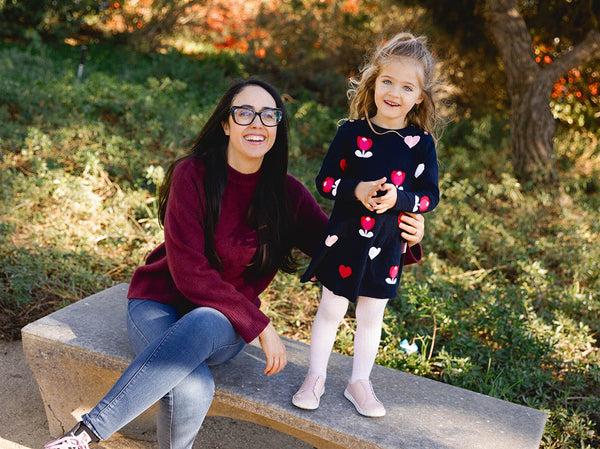
This isn’t just my company, it’s my calling.
I'm Stephanie, a mom, scientist and founder. Have questions about our product or your babies microbiome? We've got you.
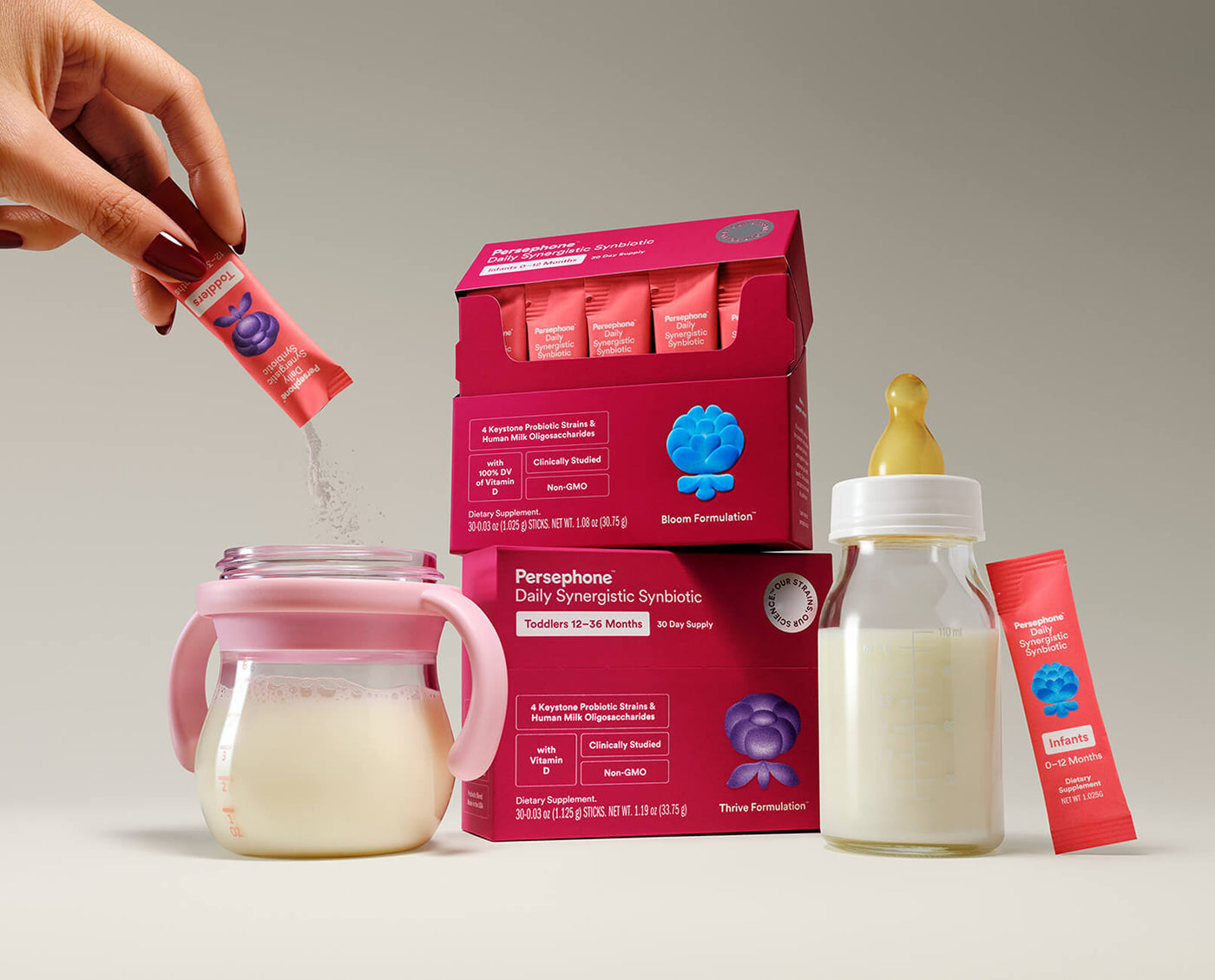
4
Keystone Strains
of infant/toddler specific probiotics
HMO
prebiotic blend
to promote bacterial longevity in the gut
100%
daily recommended value of Vitamin D for infants
FAQs
Yes. Both Bloom and Thrive are designed specifically for infants and toddlers, third-party tested at Eurofins for heavy metals, allergens, and contaminants, and certified by the Clean Label Project's First 1,000 Days Promise.
Babies born by cesarean section, or C-section, typically have a different early exposure. Instead of vaginal microbes, they are more likely to encounter bacteria from the skin, the hospital environment, and the operating room.
Most probiotics use generic strains isolated decades ago that have no ability to consume breast milk sugars. Persephone uses four proprietary strains from today's healthiest babies, precision-paired with the HMOs they've evolved to eat. It's a different category of product — not a better version of the same thing.
References
- Nieto, P. A., Nakama, C., Trachsel, J., Goad, D., Soderborg, T. K., Tan, D. S., Orlandi, A., Yuan, Q., Song, E., & Mueller, N. T. (2025). Improving immune-related health outcomes post-cesarean birth with a gut microbiome-based program: A randomized controlled trial. Pediatric Allergy and Immunology, 36(9), e70182. https://doi.org/10.1111/pai.70182.
- Jarman, J.B., Torres, P.J., Stromberg, S. et al. Bifidobacterium deficit in United States infants drives prevalent gut dysbiosis. Commun Biol 8, 867 (2025). https://doi.org/10.1038/s42003-025-08274-7.
- Shao, Y., Forster, S.C., Tsaliki, E. et al. Stunted microbiota and opportunistic pathogen colonization in caesarean-section birth. Nature 574, 117–121 (2019). https://doi.org/10.1038/s41586-019-1560-1.
- Lawson, M., et al. Breast milk-derived human milk oligosaccharides promote Bifidobacterium interactions within a single ecosystem, The ISME Journal, Volume 14, Issue 2, February 2020, Pages 635–648, https://doi.org/10.1038/s41396-019-0553-2.